
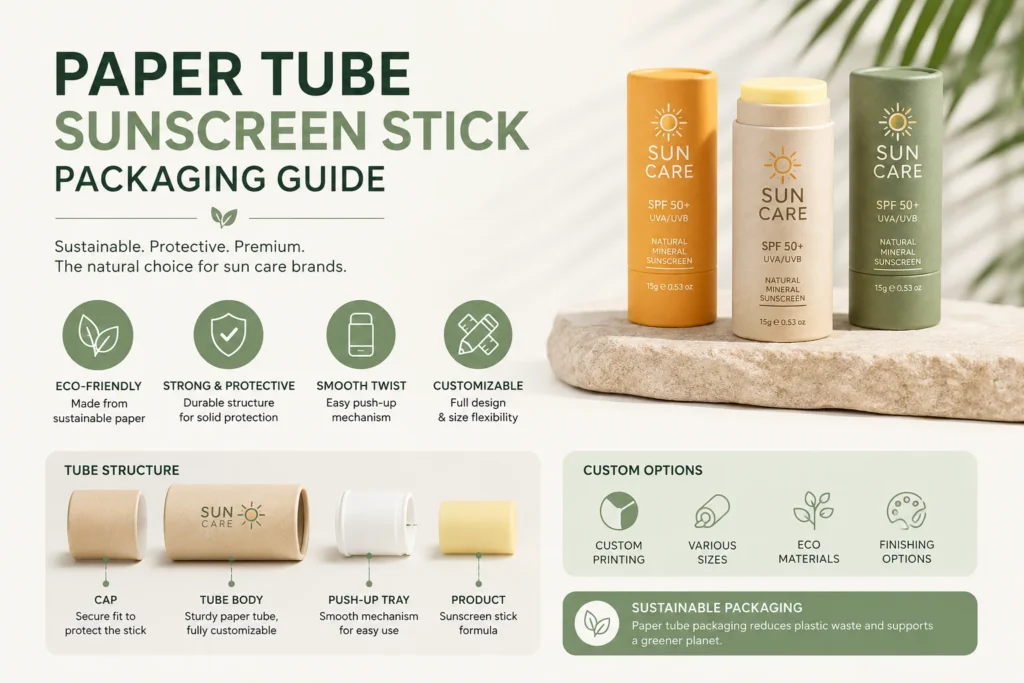
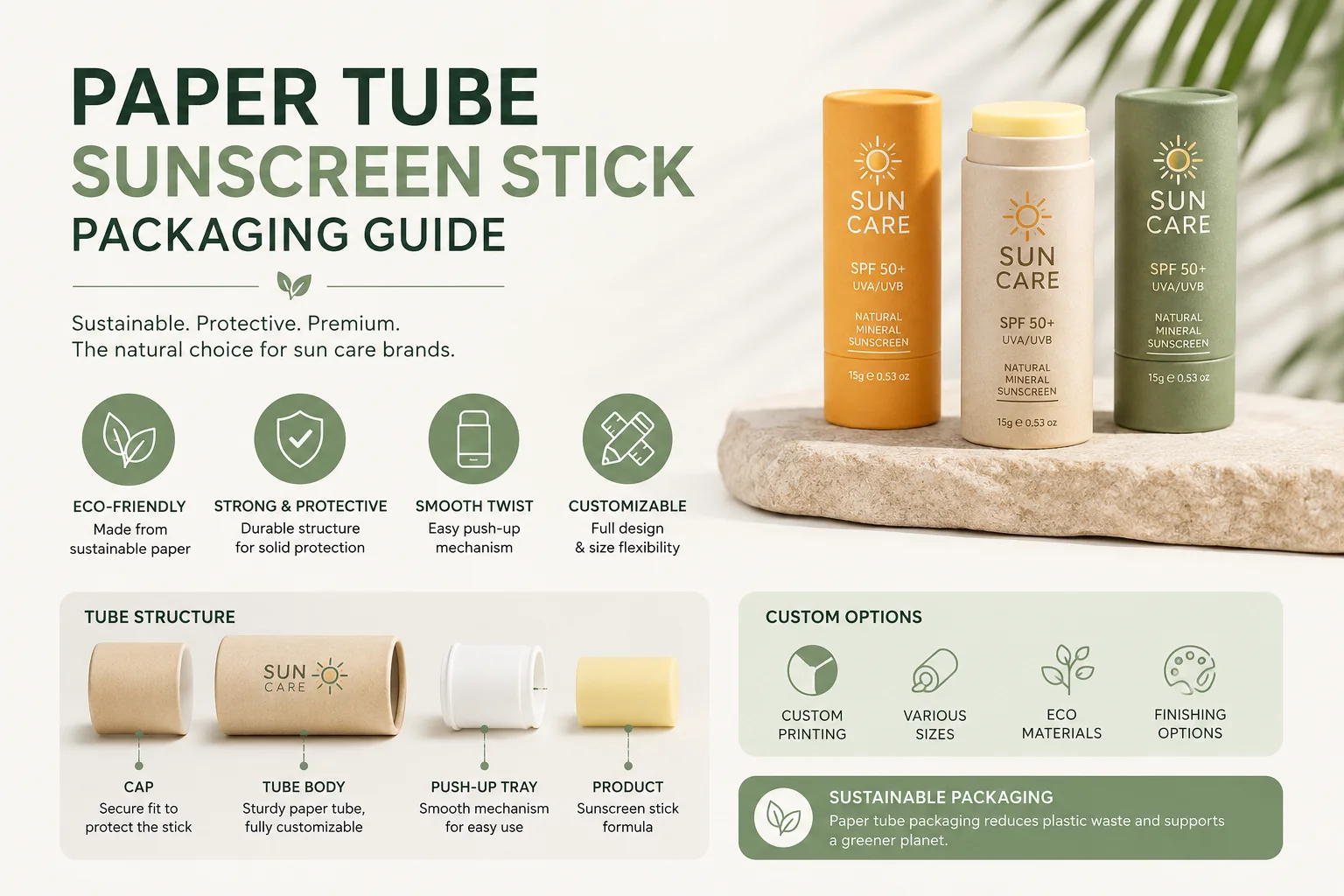
Paper tube sunscreen stick packaging gives solid SPF brands a compact push-up format with tactile paper surfaces and less reliance on rigid plastic. A successful pack, however, depends on more than appearance: the tube must suit the formula, resist oils and heat, dispense smoothly and support accurate end-of-life claims.
This guide explains how to specify sustainable sunscreen packaging for travel, retail and premium sun-care applications.
What Is a Paper Sunscreen Stick Tube?
A paper sunscreen stick tube is a cylindrical container made for a solid SPF formula. Most versions use a fitted cap, a rigid paperboard body and a bottom platform that pushes the product upward for application.
Paper-Led Construction
Layered cardboard tube packaging provides the rigidity required to protect the stick, while the outer wrap creates a large printable surface. Depending on the dispensing system, the package may be all-paper or may contain a limited non-paper component.
Push-Up User Experience
The user presses the bottom platform to expose the sunscreen and replaces the cap after use. Platform travel, internal friction and cap fit must be balanced so the stick moves predictably without slipping back into the tube.
Material Character
Natural kraft paper tube packaging supports an earthy, ingredient-led identity; smooth white paper supports clinical or minimalist sun-care branding. Both can be printed, embossed or finished to match the product positioning.
Claim Accuracy
A biodegradable sunscreen stick claim cannot be based on the visible paper alone. Coatings, adhesives, inks, closures and local disposal systems all influence whether recyclable, biodegradable, compostable or plastic-free language is appropriate.
Why Sun-Care Brands Choose Paper Tubes
Paper tubes combine a convenient solid format with a more natural visual language. The best results come from transparent material specifications and product-specific validation rather than broad environmental promises.
A Clearer Material Story
Compared with many conventional twist-up sticks, paper-led packaging can reduce the amount of rigid plastic used. See how paper compares with plastic across broader eco-friendly packaging solutions.
Packaging That Supports the Message
For mineral and ocean-conscious SPF brands, reef-safe sunscreen packaging can reinforce a responsible product story. The formula and the package are separate claims, so each should be supported independently.
Natural Texture, Premium Presence
Paper surfaces, restrained typography and soft-touch or uncoated finishes fit clean-beauty aesthetics. Explore adjacent zero-waste beauty packaging applications while keeping disposal statements specific to the final structure.
Build the Tube Around the Formula
Sunscreen sticks may contain oils, butters, waxes, UV filters, pigments and fragrance. Their behavior changes with temperature, so the body, product-contact layer, seam and push-up platform must work as one packaging system.
Responsible Paperboard
Specify the required wall strength, recycled content and sourcing documentation. When FSC-certified packaging is requested, confirm the valid chain-of-custody scope and the exact paper covered by the claim.
Oil-Resistant Barrier
A compatible inner liner or coating helps limit oil migration, staining and seam weakening. Its performance, product-contact suitability and effect on recyclability or compostability must be evaluated for the final package.
Reliable Push-Up Platform
The platform should hold the product during storage but move with controlled pressure. Test the selected paper grade, platform diameter and formula hardness together, including after warm storage.
Cap Fit and Surface Protection
The cap must stay secure during shipping and everyday use. Exterior coatings can improve rub and moisture resistance, but no paper package should be described as waterproof unless the final construction has been tested for that claim.
Custom Printing
Full-wrap CMYK or Pantone printing, foil, embossing and tactile papers can differentiate the pack. Artwork should include the correct dieline, safe area, barcode size and regulatory copy before proof approval.
Destination-Market Review
Labeling, SPF declarations, material claims and disposal instructions vary by destination. The brand remains responsible for regulatory review in each market where the finished product will be sold.
Choose Capacity by Formula and Use Case
Common fill weights are useful starting points, not universal tube standards. Formula density, stick diameter, usable internal height and platform travel determine the final dimensions.
A compact reference size for face sticks, targeted reapplication and travel-size sunscreen packaging. Confirm the final dimensions against the actual fill and labeling needs.
A versatile range for face-and-body application, broader product surfaces and daily family use while remaining easy to carry.
A larger reference format for extended body use or value positioning. The wider stick and additional mass require stronger structural and dispensing tests.
Custom sunscreen packaging can be developed around a specific product diameter, fill weight and brand silhouette. Standard tooling is normally more economical, while custom formats may require higher minimum quantities and additional sampling.
Test Filled Samples Before Mass Production
An attractive empty tube does not prove performance. Use the intended formula, filling temperature, closure and storage conditions to validate the complete pack.
Inspect the Liner, Seam and Exterior
Store filled samples upright, inverted and horizontally. Check for staining, seepage, odor transfer, softening and changes to the outer print or adhesive bond.
Simulate Warm Transport and Beach Use
Define a project-specific temperature and humidity protocol with the formulator. Review product softening, tube shape, cap fit and barrier performance after exposure.
Repeat the Push-Up Motion
Operate the pack through realistic use cycles. Confirm that the platform advances smoothly, holds its position and does not damage the sunscreen stick.
Protect the Tube in Distribution
Check compression, vibration, rub resistance and secondary packing. The retail tube may still require a corrugated outer carton or fitted insert for shipment.
What to Confirm Before Ordering
A practical supplier discussion should connect material documentation, structural engineering, sampling and production control to the exact sun-care formula.
Paper grades, liners, coatings, adhesives and non-paper components.
Blank fit samples followed by printed, formula-filled validation samples.
Order quantity, tooling, sampling schedule and production lead time.
Dimensions, cap retention, push-up force, color and appearance tolerances.
Certificates and test evidence for the exact material and destination market.
Paper Sunscreen Stick Packaging Questions
Quick answers to the material, sizing and performance questions brands most often need to resolve during development.
Are paper sunscreen stick tubes completely plastic-free?
Some push-up structures can be designed with very little or no plastic, while others use a liner, coating or mechanism component that changes the material profile. Review every component before making a plastic-free claim.
How do paper tubes protect oily sunscreen formulas?
Protection comes from the complete structure: dense paperboard, a compatible product-contact barrier, secure seams and a tested base. The liner must be selected and validated against the actual sunscreen oils, waxes and filling temperature.
What sizes are available for sunscreen sticks?
Travel, everyday and family-size formats can be developed, but fill weight alone does not determine tube dimensions. Formula density, product diameter, usable internal height and push-up platform travel must all be considered.
Can paper sunscreen tubes be recycled or composted?
It depends on the final combination of paper, coatings, adhesives, inks and any non-paper components, as well as local collection rules. Claims should be supported by supplier documentation and market-specific disposal guidance.
What should brands test before mass production?
Test filled samples for oil migration, heat exposure, humidity, cap fit, push-up performance, transport compression and repeated use. The approved production formula and real filling process should be used whenever possible.
Make Sustainability a Verified Packaging Decision
Paper sunscreen stick tubes can reduce plastic use and create a distinctive premium experience when the structure is engineered around the formula. Start with product diameter, fill weight, oil content, filling temperature, usage conditions and destination market. Then validate the barrier, push-up mechanism, cap and environmental claims before approving mass production.
Develop a Sunscreen Tube Around Your Formula
Share your fill weight, stick diameter, ingredient profile, filling temperature, target market, quantity and artwork direction. Xinhe can review the structure and prepare a practical sampling route.
Discuss your sunscreen stick packaging project →