Are Paper Tubes Recyclable?
Are Paper Tubes Recyclable?: practical buyer guidance for custom paper tube packaging projects.
Are Paper Tubes Recyclable? Read More »

Custom paper tube packaging manufacturer in China
Custom paper tube packaging manufacturer in China
Paper tube packaging can support responsible sourcing, plastic reduction and design for recycling when the full structure is specified carefully. Explore practical custom paper tube packaging and eco-friendly packaging solutions developed around your product, market and end-of-life goals.
Materials End of life Plastic reduction Buyer checklist
RenewableRecyclablePlastic ReducedDefensible
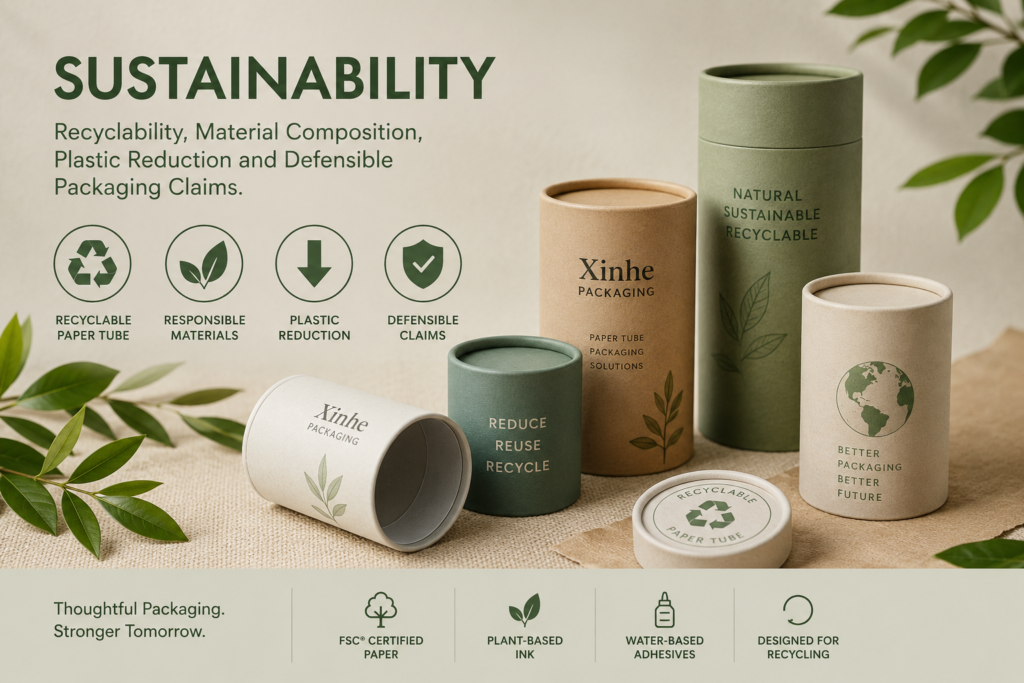
The sustainability advantage of paper tube packagingA responsible package starts with material selection and structure—not a marketing claim. Paper tubes use a fiber-based body and can be engineered to protect products while reducing dependence on rigid plastic. The best result balances sourcing, performance, product contact, disposal pathways and honest communication.
Renewable foundationPaperboard is produced from renewable wood fiber. Xinhe can develop natural kraft paper tubes, recycled-content structures and responsibly sourced paper options. For projects requiring verified chain-of-custody documentation, ask about FSC-certified packaging and confirm which papers, suppliers and claims apply to the final specification.
Recyclability and biodegradabilityA predominantly paper-based tube may be accepted in paper recycling streams, but recyclability depends on the complete package: liners, coatings, adhesives, closures and local collection rules all matter. The same caution applies to biodegradable packaging materials. Design and substantiate the finished structure before making claims. This is especially important for recyclable cosmetic packaging that may need barriers or specialty finishes.
Efficient use of material and transportPaper tubes are lightweight, nest efficiently in outer cartons and can be sized closely around the product. These choices may reduce unnecessary material and shipping volume compared with heavier or oversized formats. Actual carbon impact still depends on paper source, manufacturing, energy, delivery route and end-of-life treatment, so project-level comparisons are more useful than broad assumptions.
Reducing single-use plasticPaper tube bodies can replace part of the rigid plastic used in jars, bottles and secondary packs. Barrier performance should be matched to the product rather than added automatically. For tea, coffee, snacks and spices, our sustainable food packaging approach begins with food-contact needs, shelf life, moisture, oxygen and filling method.
Supporting a circular design approachCircular packaging keeps materials useful for as long as practical and makes separation easier at end of life. Start with the simplest structure that performs reliably, minimize mixed materials and plan labeling around the target market. Branding can still feel premium: compare paper tube printing options and use our packaging design services to select finishes that support both presentation and material goals.
Transparent claims build trustTerms such as recyclable, biodegradable, compostable, plastic-free and FSC certified are not interchangeable. Claims should reflect the exact supplied structure and the disposal infrastructure available in the destination market. Document the paper grade, recycled content, liner, lid, adhesive and certification scope so buyers and consumers receive clear, defensible guidance.
The business case for better packagingSustainability can strengthen brand differentiation, improve shelf appeal and support retailer or corporate packaging requirements. For wholesale paper tubes, early structural decisions also help control material use, packing efficiency, production complexity and total landed cost. The most effective specification protects the product and communicates value without unnecessary components.
A practical sustainability checklistUse these three checks before approving a sample. They turn broad environmental goals into a production-ready brief your packaging supplier can verify.
1. Product and protectionDefine product contact, shelf life, moisture and oxygen sensitivity, filling method, shipping conditions and closure expectations. Review available liners and barrier options only after the protection target is clear.
2. Complete material compositionRequest the paper grade, recycled content, liner, coating, adhesive, lid and insert specification. Ask whether components can be separated and which local recycling stream may accept the finished package.
3. Evidence and target marketConfirm certification scope, supplier documentation, testing needs, labeling language and the regulations or retailer rules that apply at the sales destination. Avoid making a claim that cannot be supported by the approved production specification.
Build sustainability into the specification.Share your product, size, quantity, barrier needs, sales market and environmental goals so our team can recommend a practical structure. Discuss your project →
Certifications Recyclability Guide Paper vs Plastic Factory Tour
Latest sustainability guidesCompare material choices, recycling considerations and plastic reduction strategies in our practical buyer resources below.
Are Paper Tubes Recyclable?: practical buyer guidance for custom paper tube packaging projects.
Are Paper Tubes Recyclable? Read More »
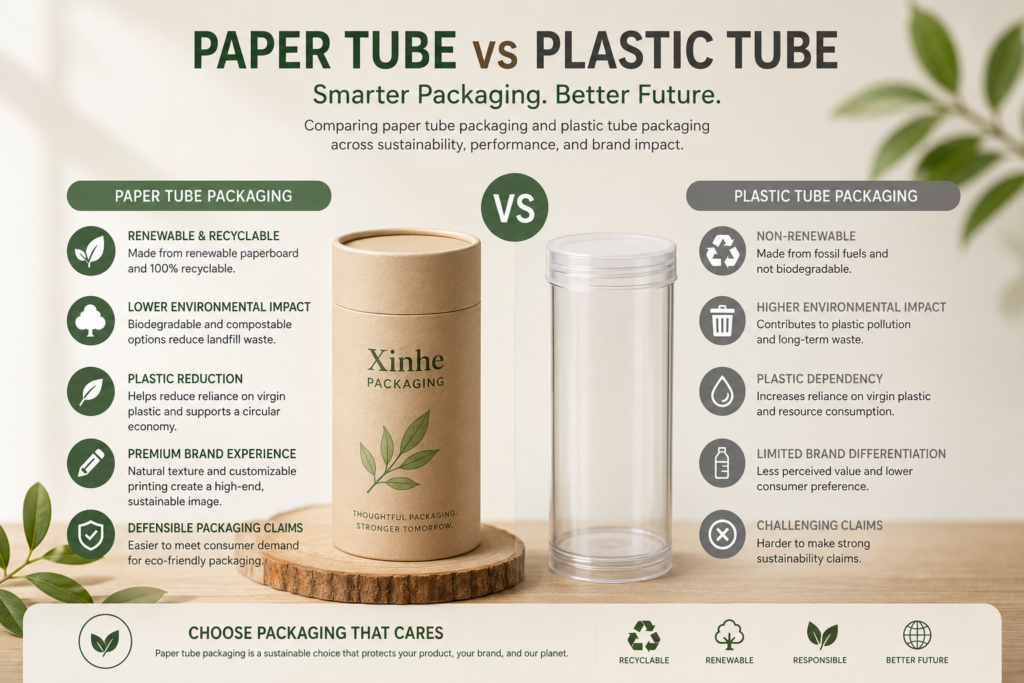
Paper Tube vs Plastic Tube Packaging: practical buyer guidance for custom paper tube packaging projects.
Paper Tube vs Plastic Tube Packaging Read More »