
Verify the production site, test the evidence and turn findings into a clear supplier decision. Use five paper-tube-specific audit modules, a downloadable worksheet and a weighted scoring tool.
Audit the process—not just the showroom.
A paper tube factory audit in China checks whether a supplier has the people, equipment, materials and controls needed for your specific order. Start with a clear understanding of paper tube manufacturing and the difference between an attractive sample and repeatable production.
This guide is published by Xinhe Packaging as buyer education. It is not an independent audit report, certification or guarantee of supplier performance.
Three ways to assess a factory
Choose the level of review by product risk, supply-chain complexity and the consequences of failure—not an arbitrary order-value threshold.
| Method | Useful for | Time planning | Cost planning & limits |
|---|---|---|---|
| Document review | Identity, scope, certificates and specifications | Allow review and clarification time | Internal staff time; verification or translation may cost extra. Documents alone do not prove current operations. |
| Live video review | Site walkthrough and buyer-selected spot checks | 30–60 min for a focused screen; longer for detailed review | Confirm supplier, interpreter and auditor fees. Limited physical testing and independent access. |
| Independent on-site audit | Higher-risk products, new sites and conflicting evidence | One or more auditor-days, depending on scope | Get an itemized quote for scope, location, travel, testing and follow-up. Specialist modules can add cost. |
Budget example, not a market rate: if an auditor quotes USD 600 for one auditor-day plus USD 150 travel, the subtotal is USD 750 before any testing, tax or re-audit. Replace these illustrative inputs with a written quotation.
For an independent provider’s explanation of audit scope, duration and quote-based pricing, see QIMA manufacturing audits. No commercial affiliation is implied.
Define what a pass means.
Prepare a custom paper tube specification covering usable dimensions, tolerances, wall construction, lid fit, load performance, finish and intended product contact. Values such as ±0.5 mm are examples, not universal factory acceptance limits.
Use the paper tube size guide and MOQ and lead-time guide to align the technical and commercial brief.
- Confirm site address, scope, attendees and access in advance; choose a normal operating day.
- Request a sample of recent, redacted production and quality records.
- Agree confidentiality, photo permissions and safe routes before entering the workshop.
- Record gaps as unverified. Do not collect personal employee IDs, unrelated payroll or confidential customer files.
Five core audit modules
The suggested 30 / 60 / 45 / 30 / 15-minute allocation totals three hours. It is a focused technical walkthrough, not a full-day regulatory or social-compliance audit. Expand the scope where needed.
01. Legal identity & compliance
Illustrative agenda: 30 minWhat to check: Match the contracting entity, factory address and actual production operator. Record any declared subcontractors and the approvals applicable to the site and process.
Ask the team
Which entity will invoice us, and which site will manufacture our order? Can you explain any address or company-name differences?
Evidence to collect
Public registry result, permission-based entrance photo, certificate number and scope, documented subcontracting arrangement.
Red flags: Unexplained entity mismatches, unverifiable certificates or refusal to identify the production site.
02. Production capacity & equipment
Illustrative agenda: 60 minWhat to check: Follow the material route from slitting and winding through cutting, drying or conditioning, wrapping and assembly. Compare demonstrated output with current workload and bottleneck capacity.
Ask the team
Show a recent comparable production order. What is the good-unit output at the slowest operation, after downtime, changeovers and scrap?
Evidence to collect
Machine IDs and maintenance summaries, a timed output observation, redacted production logs, batch-labelled work in progress.
Red flags: Capacity based only on nameplate speed; production records do not match the demonstrated process; undisclosed outsourcing.
03. Quality management & traceability
Illustrative agenda: 45 minWhat to check: Review incoming checks, first-article approval, in-process measurements, final inspection, calibration and nonconformance handling. Trace one finished carton back to its materials.
Ask the team
What happens when a lid is too tight or a dimension is out of tolerance? Show a recent rejection and its corrective action.
Evidence to collect
Approved specification, inspection records, calibration status, lot trace and a redacted corrective-action example.
Red flags: Blank or copied inspection records, expired calibration, no rejected-goods segregation or no traceable lot code.
04. Materials, adhesives & storage
Illustrative agenda: 30 minWhat to check: Check paper grade, supplier identification, adhesive specification, liner traceability, storage conditions and stock rotation. Match contact-material evidence to the intended product and sales market.
Ask the team
Which materials touch the product? Can you link this material batch to its specification and supporting test or compliance documentation?
Evidence to collect
Material labels, specification and lot records, relevant test reports, storage observations and conditioning records.
Red flags: Unlabelled adhesive, damp paper, uncontrolled substitutions or an SDS presented as the only proof of food-contact suitability.
05. People, safety & management
Illustrative agenda: 15 minWhat to check: Confirm who can stop or release production, operator training, guarding, dust control, ventilation, exits and required PPE. A short walkthrough is not a comprehensive social-compliance audit.
Ask the team
Who has final release authority, and how are new operators trained? How can staff report a safety or quality concern?
Evidence to collect
Training summaries, responsibility chart and permission-based safety observations. Use anonymized records; do not collect personal employee IDs.
Red flags: Blocked exits, immediate safety hazards, missing machine guards or no clear responsibility for resolving defects.
Ask for current certification and compliance references, then verify the issuer, site, scope and validity. ISO does not issue certificates; certification is performed by external bodies.
Checks a generic factory audit can miss
Winding & cutting
Check roundness, wall consistency, cut edges and the measurement method. Review tooling and maintenance together with output quality; machine age alone is not a pass/fail rule.
Adhesive & liners
Match material identity and product-contact conditions to supporting evidence. An SDS describes hazards; it does not by itself establish food-contact suitability.
Food-grade paper tube materials · Liners and barrier options
Conditioning & moisture
Review time, humidity, temperature and measurement controls appropriate to the process. Check dimensional stability after conditioning; no single drying-room setup suits every construction.
Printing & finishing
Compare approved color references, wrap seams, glue marks, foil registration and retained samples. Ask how outsourced printing is controlled.
AQL & measurement
Agree defect classes, lot size, inspection level, AQLs and acceptance criteria. Inspection level and AQL are different settings; AQL 2.5 is not a universal requirement.
ISO 2859-1 acceptance sampling provides the relevant standard framework.
Food-contact review must consider the actual material and market. EU Regulation 10/2011 concerns plastics; it is not a blanket certificate for paper tubes or adhesives. Consult the European Commission’s food-contact legislation overview and a qualified specialist.
A useful live video audit follows a lot.
A prerecorded tour provides context. A live review lets the buyer choose the route, ask questions and select evidence in real time. It cannot establish a fixed percentage of on-site assurance.
Confirm the site
Start at the agreed entrance; identify the operator and explain any different company names. Agree recording permissions.
Follow the material flow
Walk continuously from paper storage through winding, cutting, conditioning and packing. Record any inaccessible area for follow-up.
Select evidence live
Choose a current lot, observe one agreed measurement and cross-check its batch label against an inspection record. Avoid unsafe requests around running machinery.
Close the gaps
List evidence still needed, owners and deadlines. Use independent testing, sampling or an on-site visit where the risk cannot be resolved remotely.
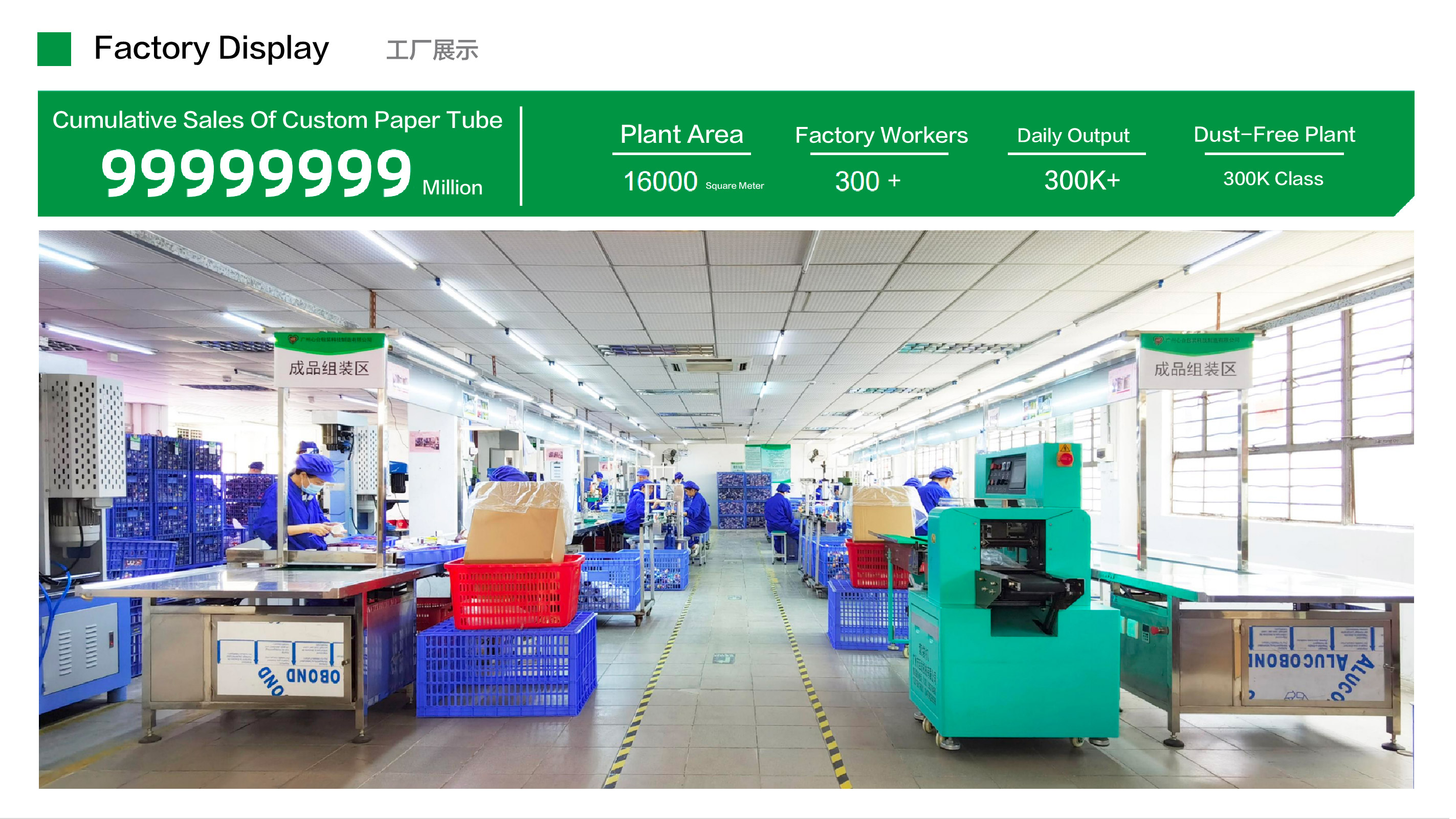
Use the existing Xinhe factory tour to prepare questions, then contact the team to discuss live access and availability.
Request a video review →Common traps and practical responses
A showroom-only visit
Ask to trace a recent comparable order from materials to finished goods and identify every production site. Declared subcontracting is different from hidden subcontracting.
An impressive certificate wall
Validate certificate details with the issuer rather than relying on a logo or scanned image. A company-name mismatch needs explanation, not an immediate accusation.
Inflated monthly capacity
Estimate good units at the bottleneck, subtract existing commitments and compare the result with redacted schedules and shipping records. Utility bills alone cannot prove capacity.
Factory audit score calculator
A suggested buyer framework, not an ISO standard or Xinhe certification. Score each dimension from 0 to 100 using documented evidence. Do not assign passing scores to unknowns.
80–100: consider samples and a controlled trial.
60–79.9: corrective action and recheck.
Below 60: do not approve at this stage.
Critical identity, legal or safety findings override the total. Document each finding, severity, action owner, due date and closure evidence.
Approval is the beginning.
The audit assesses the supplier’s systems and capability. Pre-production checks confirm readiness and materials; in-process checks monitor production; a pre-shipment inspection evaluates a specific finished lot.
Agree which checks your project needs and who can authorize release. For a broader buying workflow, see the paper tube packaging buying guide.
Use this paper tube manufacturer selection guide alongside the audit evidence.
Existing Xinhe factory video—not a recording of an independent audit. Request a live session for current, buyer-selected checks.
Paper tube factory audit FAQ
How much does a factory audit in China cost?
There is no single rate. In-house document screening uses staff time; remote review may involve supplier, interpreter or auditor fees. Independent on-site pricing depends on scope, location, auditor-days, travel, testing and follow-up. Obtain an itemized quotation; example budgets in this guide are not service offers.
Can I audit a paper tube factory remotely?
A live walkthrough can check identity, visible equipment, material labels and selected records. Ask for a continuous route and buyer-selected checks. Remote review cannot fully replace independent sampling, physical tests, private interviews or an on-site assessment when risk is high.
How long does an audit take?
Plan enough time for documents, production observation, interviews and a closing meeting. A focused video screen may take 30-60 minutes; a broader on-site audit may need one or more auditor-days. The five-module 180-minute agenda is a focused technical review, not a full compliance audit.
Is a factory audit the same as a pre-shipment inspection?
No. An audit assesses the supplier and its systems. A pre-shipment inspection checks a particular finished lot against the agreed specification and sampling plan. Neither guarantees every unit or future shipment will be defect-free.
How can I distinguish a factory from a trading company?
Match the contracting and production entities, verify the site, follow a live production process and trace a recent order through records. A disclosed trading company or subcontracting arrangement is not automatically unacceptable; undisclosed relationships and contradictory evidence are the concern.
Does every paper tube factory need ISO 9001?
ISO 9001 certification is a useful management-system credential, but it is not a universal legal requirement for every paper tube supplier or proof that a specific product is compliant. Set requirements for your market and contract, and verify certificate scope, site and validity with the issuer.
Is AQL 2.5 suitable for all paper tubes?
No. Agree critical, major and minor defects, lot size, inspection level, AQLs and acceptance/rejection criteria for the intended use. AQL is a sampling-plan parameter, not a promise that a fixed percentage of defects is acceptable in every shipment.
When should I use an independent third-party audit?
Consider independence and specialist expertise when the supplier is new, the product is regulated or high risk, evidence conflicts, or a production failure would be costly. Order value alone is not a sufficient decision rule.
What should happen after a failed audit?
Document findings with evidence, severity, owner, due date and verification method. Resolve critical legal or safety concerns before approval. Recheck corrective actions, then decide whether a controlled sample or trial order is appropriate.
Can I arrange a Xinhe factory visit or video review?
Contact Xinhe with the product, requested scope, preferred dates and attendee details. The team can confirm availability and agree which production areas and documents can be reviewed. A supplier-hosted tour is not an independent certification audit.
Prepare your next supplier review.
Download the worksheet or send Xinhe your product brief, preferred dates and audit scope. Availability, access, confidentiality and any applicable arrangements are confirmed in advance.
Updated September 2026 · Educational guidance, not legal advice or a supplier certification.