
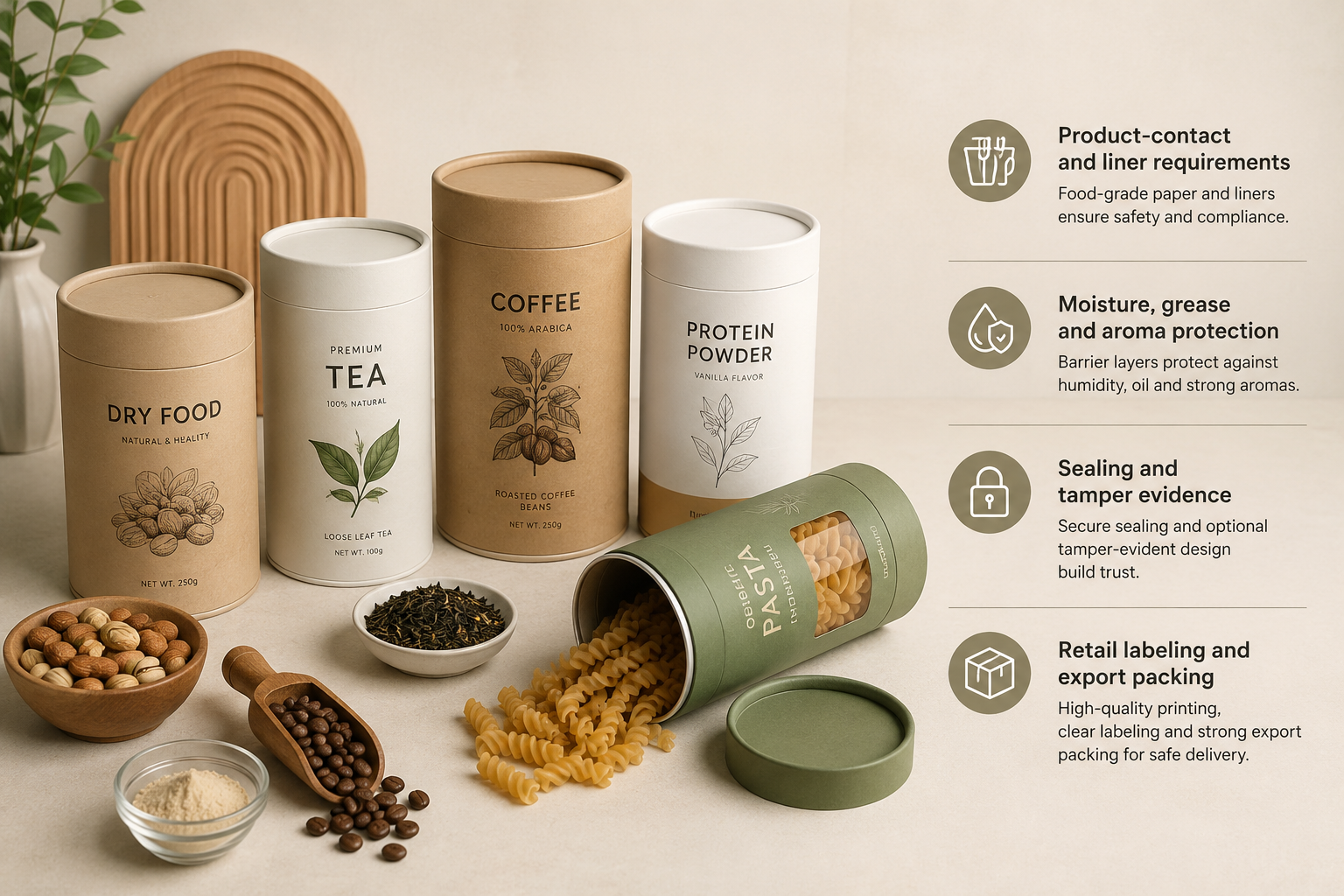
A sustainable choice for modern brands balancing protection, premium presentation and responsible material decisions.
Function, Aesthetics and Material Responsibility
In today’s eco-conscious market, brands are seeking packaging that protects the product, communicates quality and supports credible environmental goals. Paper tubes have become a distinctive option across premium food packaging, from gourmet snacks and specialty teas to powders and gift-ready products.
These cylindrical containers can reduce dependence on rigid plastic while delivering strong shelf presence. A successful sustainable packaging project still depends on the complete specification: product contact, barrier layer, closure, paper source, filling process, transport route and local end-of-life system.
What Are Paper Tubes for Food Packaging?
Paper tubes—also called cardboard tubes or cylinder packaging—are rigid containers made by winding multiple layers of paperboard into a strong cylindrical body.
Layered Paperboard Construction
Spiral or convolute winding creates a durable but lightweight container. The outer wrap may use white printed paper, textured stock or natural kraft paper, depending on the desired brand expression and performance.
Protection Matched to the Food
For direct-contact or freshness-sensitive applications, the tube may use food-grade liners, grease-resistant paper, foil structures or a separate sealed inner bag. The correct option depends on moisture, oxygen, aroma, oil and shelf-life requirements.
Why Food Brands Use Paper Tubes
The value comes from combining structural performance with a premium consumer experience—not from the paper body alone.
Responsible Material Direction
Paper tube bodies use renewable fiber and may include responsibly sourced or recycled content. Whether the finished package qualifies as recyclable food packaging depends on the liner, coating, adhesive, lid and local collection system. Claims should reflect the approved structure.
Product Protection
Multi-layer paperboard helps block light and resist physical damage. When paired with an appropriate barrier and closure, food-grade paper tubes can support freshness for coffee, tea, spices, cookies, snacks and protein powders.
Premium Aesthetic Appeal
The cylindrical surface provides a strong canvas for color printing, embossing, foil stamping and tactile finishes. The result can feel minimalist, artisanal, organic or luxurious while maintaining clear ingredient and compliance information.
Efficient Storage and Shipping
Compared with heavier glass or metal formats, paper tubes are lightweight and stackable. Closely matching the tube to the product can reduce empty space, improve warehouse organization and support more efficient outer-carton packing.
Versatility Across Food Categories
Diameter, height, wall thickness, lid, liner and printing can be adapted for different products. This makes custom packaging practical for both individual products and coordinated multi-SKU ranges.
One Format, Many Food Categories
Each category brings different protection and filling requirements. A coffee canister may prioritize aroma and oxygen control, while nuts or baked goods may require grease management and crush protection. The packaging structure should be tested against the actual product.
- Coffee and TeaAroma retention, moisture control and secure reclosure
- Snacks and NutsGrease-resistant systems and easy sharing
- Spices and SeasoningsLight protection and controlled dispensing
- Baked GoodsRigid support to reduce crumbling
- Protein and SuperfoodsMoisture barriers, scoops and label planning
- Food Gift SetsPremium finishes and coordinated presentation
Choosing the Right Food Paper Tube
Confirm the packaging role and protection target before selecting finishes. This keeps the sample realistic and the quote comparable.
- Product Contact and StandardsState whether food touches the tube or sits inside a separate bag. Confirm applicable food safety standards, market documents, adhesives and inks for the final specification.
- Barrier PropertiesMatch moisture, oxygen, grease, aroma and light protection to the product and expected shelf life. Do not add complex materials without a defined performance need.
- Closure SystemCompare paper ends, metal lids, plastic caps and plug-style closures. Each choice affects opening feel, reclosure, sealing method, total plastic content and recyclability guidance.
- Artwork and CustomizationPlan the printable area, overlap, barcode, nutrition panel, ingredients, legal text, color standards, finishes and any window or tamper-evident feature before sampling.
A Forward-Looking Choice for Food Brands
Demand for paper-based and plastic-reduced formats is growing, but performance and transparency remain essential. Paper tubes can support a circular design approach when brands minimize unnecessary mixed materials, document the full structure and provide end-of-life guidance appropriate to the target market.
For new launches and rebranding projects alike, the best result protects the food, communicates the brand and uses only the materials needed to meet the real performance target. That balance positions paper tubes as a credible option for modern food packaging strategies.
Develop a Food Tube Around Your Product
Share the food type, contact method, dimensions, fill weight, shelf-life target, barrier needs, quantity, artwork and destination market. Xinhe can review the structure, prepare samples and support bulk production and export packing.
Discuss your food tube project →